Learn to Paint with Olga Shmatova
Felt-Tip Pens and Colored Pencils: A Self-Study Guide

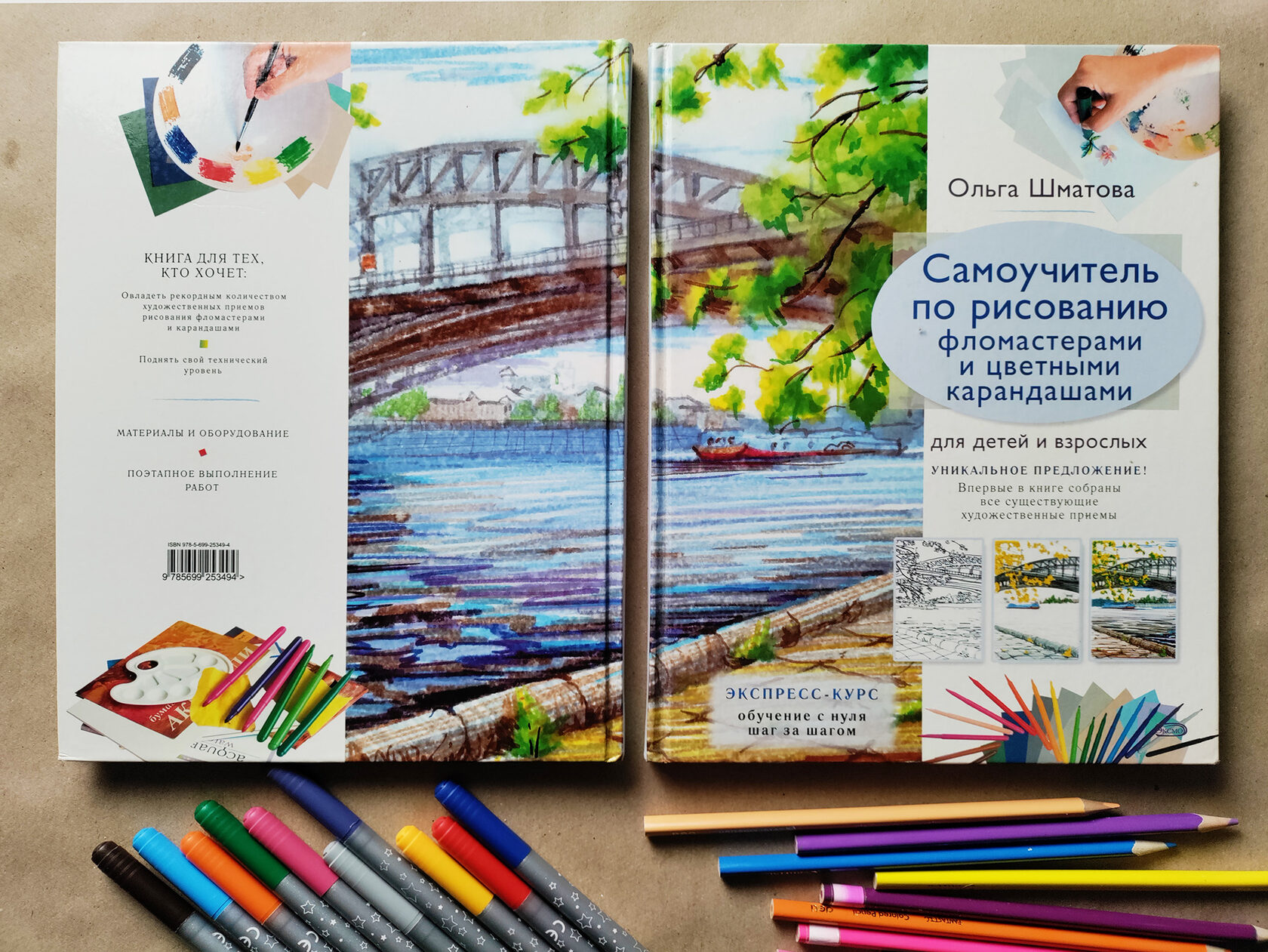
Print edition: EKSMO (in Russian), out of print. Digital edition: in preparation.
Continued in two expanded self-study guides: one on colored pencils and one on markers.
About the book
This self-study guide was published by EKSMO in 2007, in the series "Learn to Paint with Olga Shmatova."
After the success of the watercolor self-study guide in 2005, the series gained a unique book that brought two drawing media together.
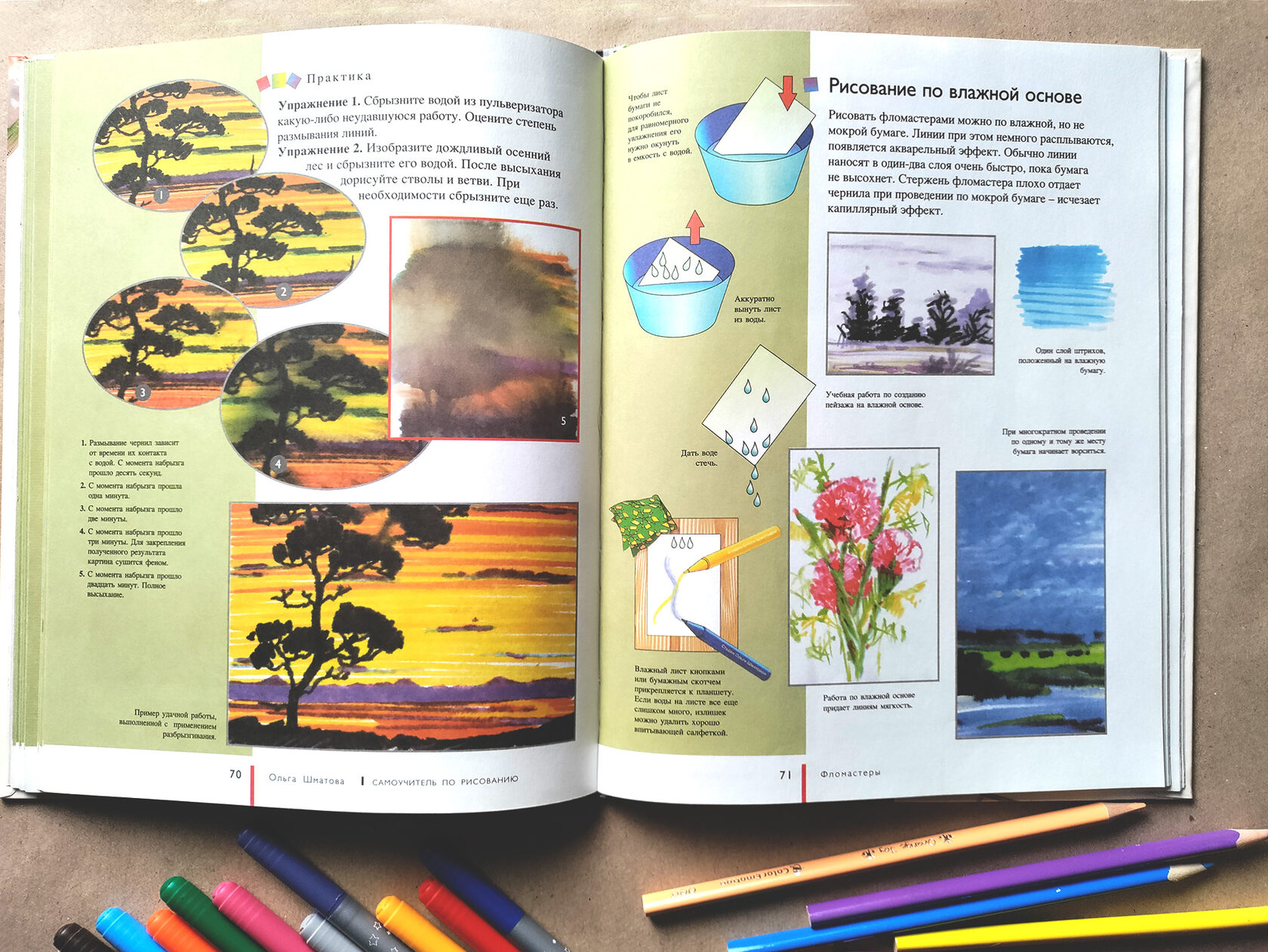
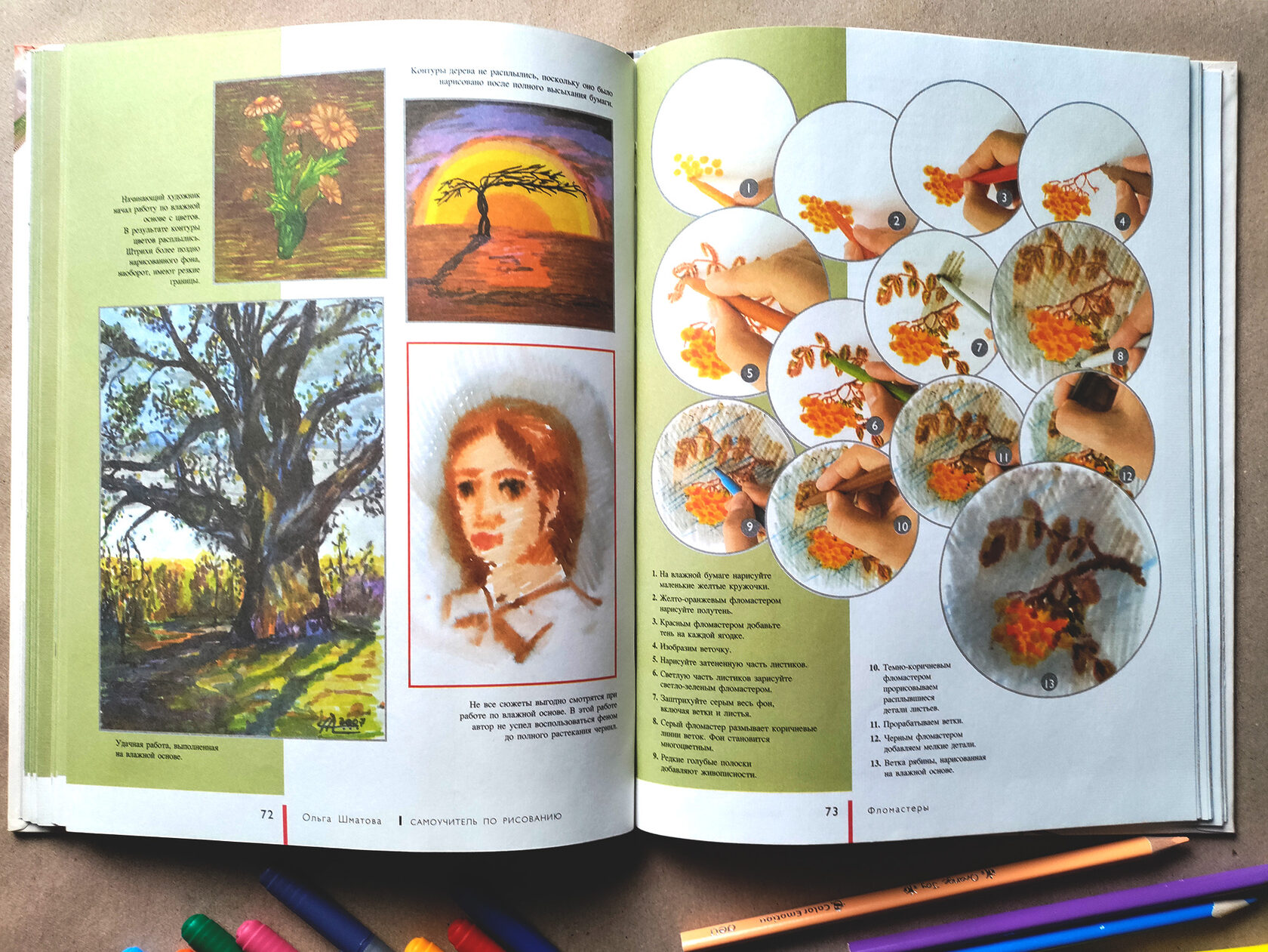
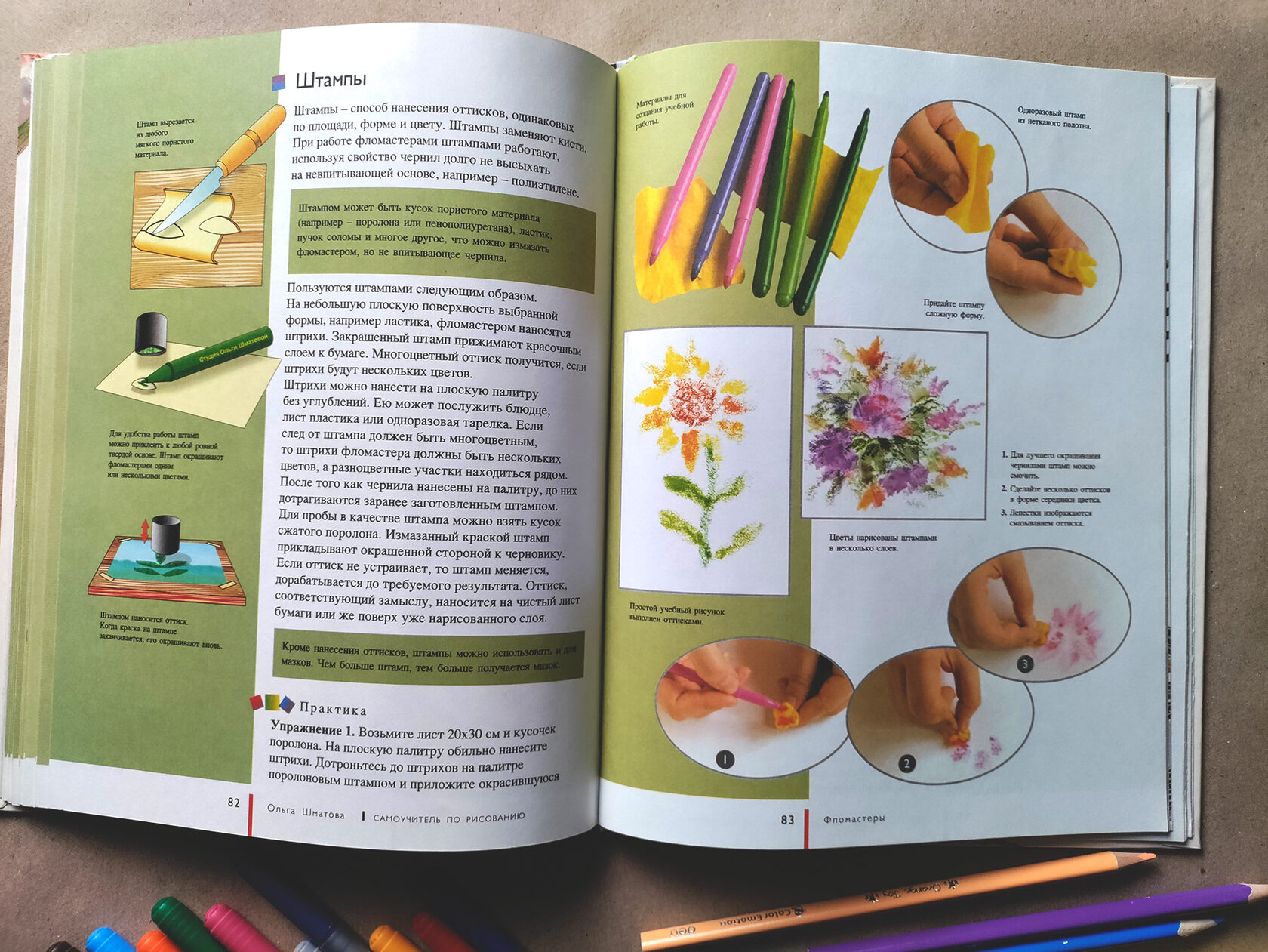
It was the first self-study guide in Russia to explore in depth what felt-tip pens can do as an art medium. Until then, felt-tip pens were seen only as a tool for highlighting text or as a children's art supply. Olga Shmatova opened up new possibilities for this material by developing her own techniques for using felt-tip pens as a painting medium. Examples include "Lines with a half-dry pen," "Complex-shaped nib," "Spattering," "Drawing on a wet surface," and "Felt-tip pens as paint."
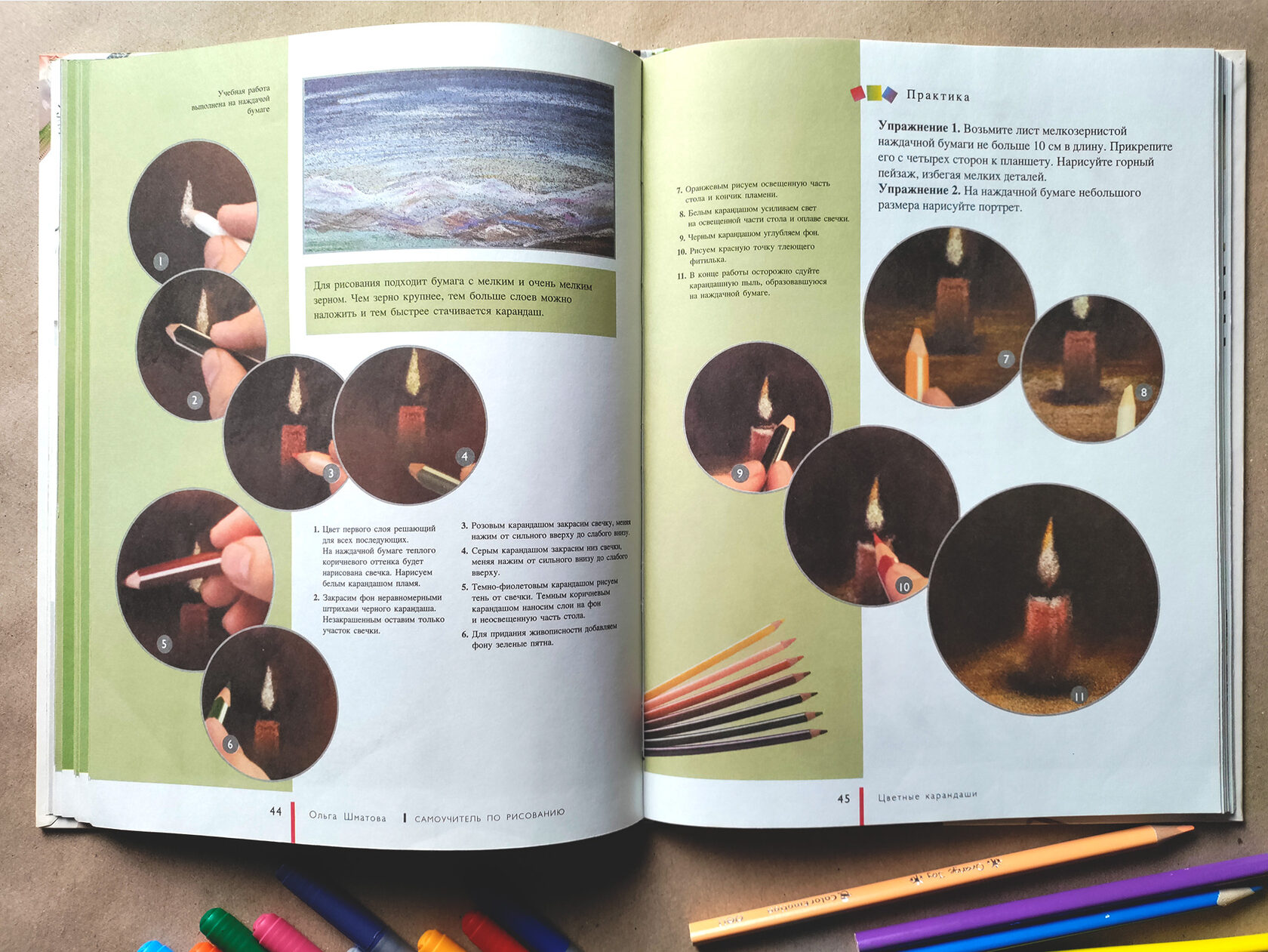
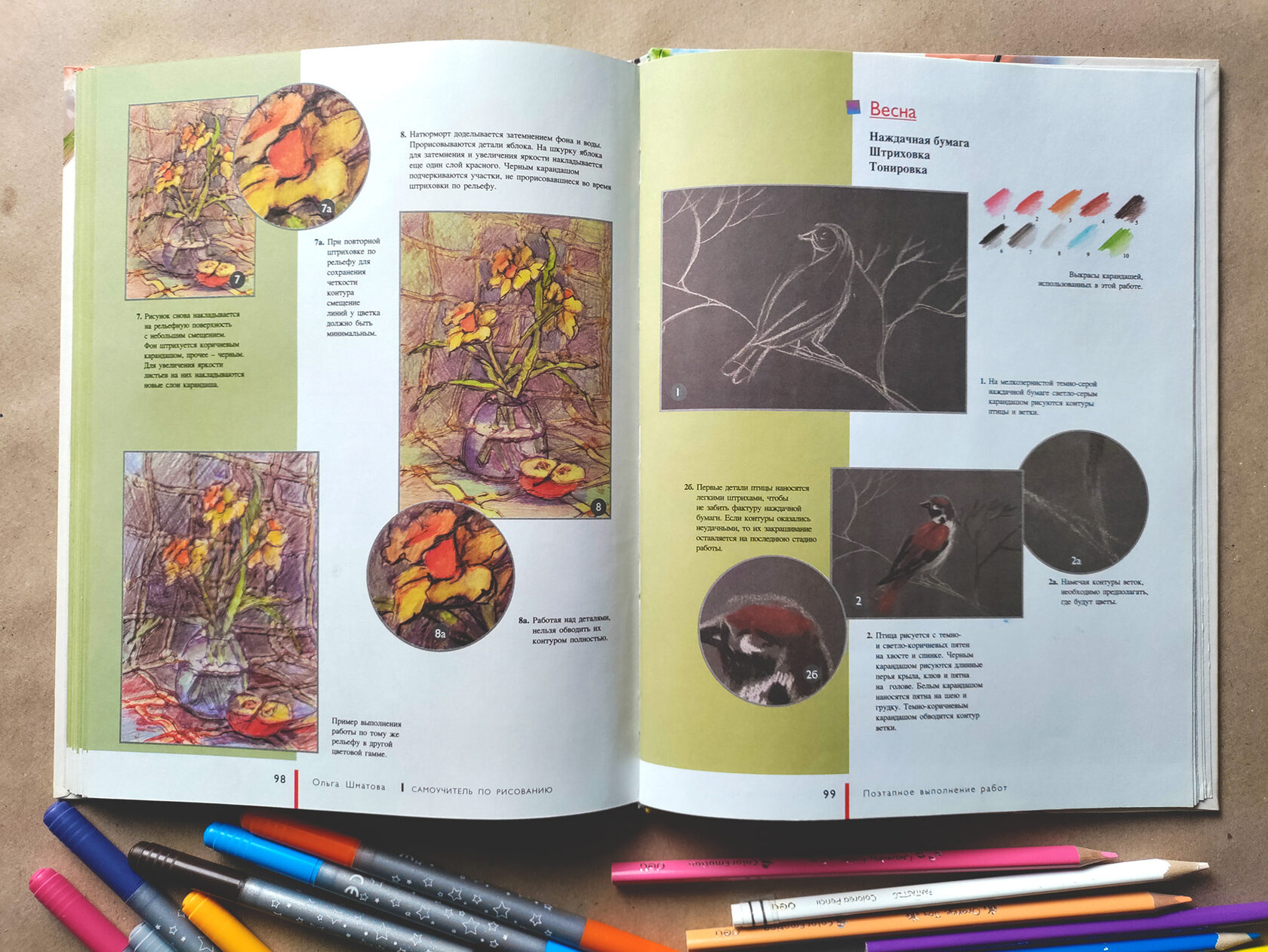
In the colored pencil section, the author didn't just adapt classic drawing techniques. She also introduced new ones, such as "Drawing on a textured surface" and "Drawing on sandpaper."
The book's success helped the art supply market grow. Professional refillable felt-tip pens with replaceable nibs appeared, along with sets in a wide range of colors and special types of pens (alcohol-based and watercolor). The range of colored pencils at different price points grew as well.
Edition history
- 2007: Felt-Tip Pens and Colored Pencils: A Self-Study Guide is published.
- 2016: A second, improved and expanded edition comes out as a self-study guide to colored pencils, in the series "Learn to Paint with Olga Shmatova." It is still being reprinted.
- 2021: A second, improved and expanded edition comes out as Markers, Fineliners, and Felt-Tip Pens: A Self-Study Guide, in the same series. It is still being reprinted.
Why colored pencils
Versatile:
- Good for both line drawing and painterly work
- Combine well with other media
- Work on many different surfaces
- Allow a wide variety of techniques
Practical:
- Need no special working conditions
- Need very few extra tools
- Compact supplies
- Easy to carry
Technical possibilities:
- Precise control of the line
- Color built up in layers
- Fine, detailed work
- Complex color transitions
Why felt-tip pens
Creative potential:
- Bright, clean color
- Painterly effects
- A variety of lines and strokes
- Surprising effects when you combine techniques
Easy to use:
- Ready to work instantly
- Even color application
- Quick drying
- No extra tools needed
Modern options:
- A wide color range
- A variety of nibs
- Special effects (metallic and fluorescent colors)
- Refillable
Who this book is for
- Beginning artists who want to learn to work with colored pencils and felt-tip pens
- Anyone who wants to use drawing media to create painterly effects
- Artists who want to expand their technical skills
- Anyone looking for new creative possibilities in familiar materials
What's inside
Contents
- Art materials, p. 6
Colored pencils
- Getting to know your pencils, p. 13
- Strokes, p. 16
- Hatching, p. 19
- Blending one color into another in a single layer, p. 22
- Toning and blending, p. 24
- Layers in a pencil drawing, p. 26
- Transparent and opaque colors, p. 30
- Revealing the white, p. 32
- Stencils, films, and tape, p. 34
- Pencil dust, p. 36
- Drawing on a textured surface, p. 38
- Colored ground, p. 40
- Drawing on sandpaper, p. 42
Felt-tip pens
- Getting to know your felt-tip pens, p. 46
- Thick and thin lines, p. 49
- Lines with a half-dry pen, p. 50
- Complex-shaped nib, p. 52
- Hatching and toning, p. 54
- Pointillism, p. 58
- Stencils, p. 60
- Layers, p. 63
- Spattering, p. 68
- Drawing on a wet surface, p. 71
- Felt-tip pens as paint, p. 75
- Strokes, p. 82
- Monotype, p. 85
- Drawing on a textured surface, p. 89
- Colored ground, p. 92
- Mixed media and corrections, p. 94
Let's draw together
- A bouquet of daffodils, p. 96
- Spring, p. 99
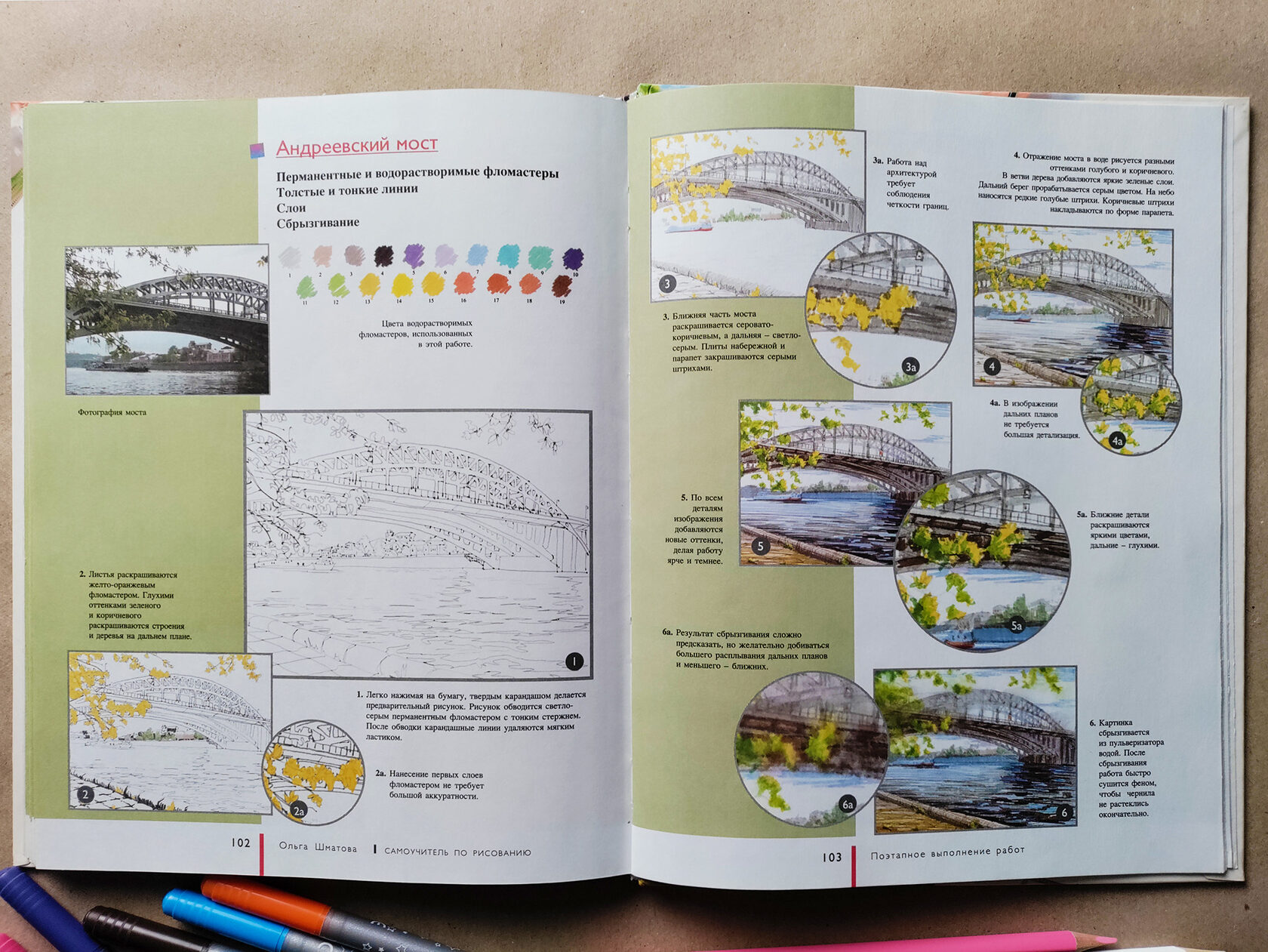
- Andreyevsky Bridge, p. 102
- Artists on the beach, p. 105
- Strawberries and wild strawberries, p. 108
In the book
- 13 colored pencil techniques
- 16 felt-tip pen techniques
- 3 to 10 exercises in each technique chapter
- 5 complete step-by-step demonstrations of a finished picture
Features
- Clear explanations with examples of finished work
- Detailed step-by-step illustrations
- Technique diagrams with practical tips
- Common mistakes and how to fix them
- A set of exercises for every technique
- Advice from an experienced artist
- A "Let's draw together" section that creates 5 drawings step by step
What you will learn
- Skills and techniques for working with felt-tip pens and colored pencils
- How to create smooth transitions of color and tone
- How to draw fine lines
- How to apply semi-transparent layers
- Original techniques for felt-tip pens and colored pencils
- How to choose materials and tools
Student work
The book features work by the author and her students, credited in the book. The author is grateful to all of them.
Edition details
- Series: "Learn to Paint with Olga Shmatova" (in Russian)
- Publisher: EKSMO
- ISBN 978-5-699-25349-4
- 112 pages, illustrated
- Format: 84×108 1/16
- First published: 2007
- No longer reprinted
The year printed in your copy may differ from the year of first publication, because the publisher updates it with every reprint. You can check which edition you have in the publication details on the last page of the book. The ISBN may also change with a reprint.
Inside the book
New practice sheets and drawing tips by email
Optional — no signup needed to download.
One email a week at most. Unsubscribe anytime. Privacy Policy