Learn to Paint with Olga Shmatova
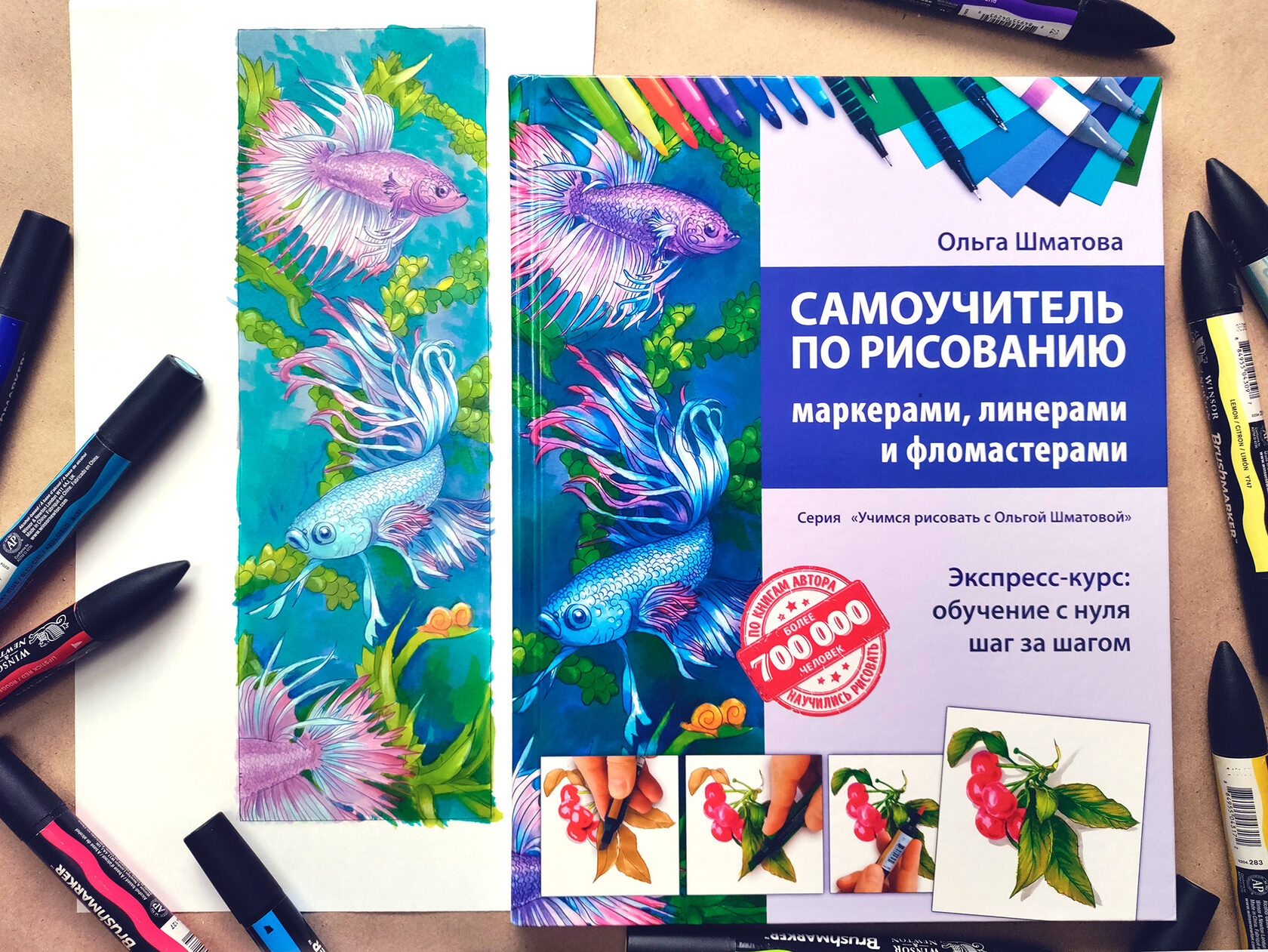
Markers, Fineliners, and Felt-Tip Pens: A Self-Study Guide

Print edition: EKSMO (in Russian), in print. Digital edition: in preparation.
About the book
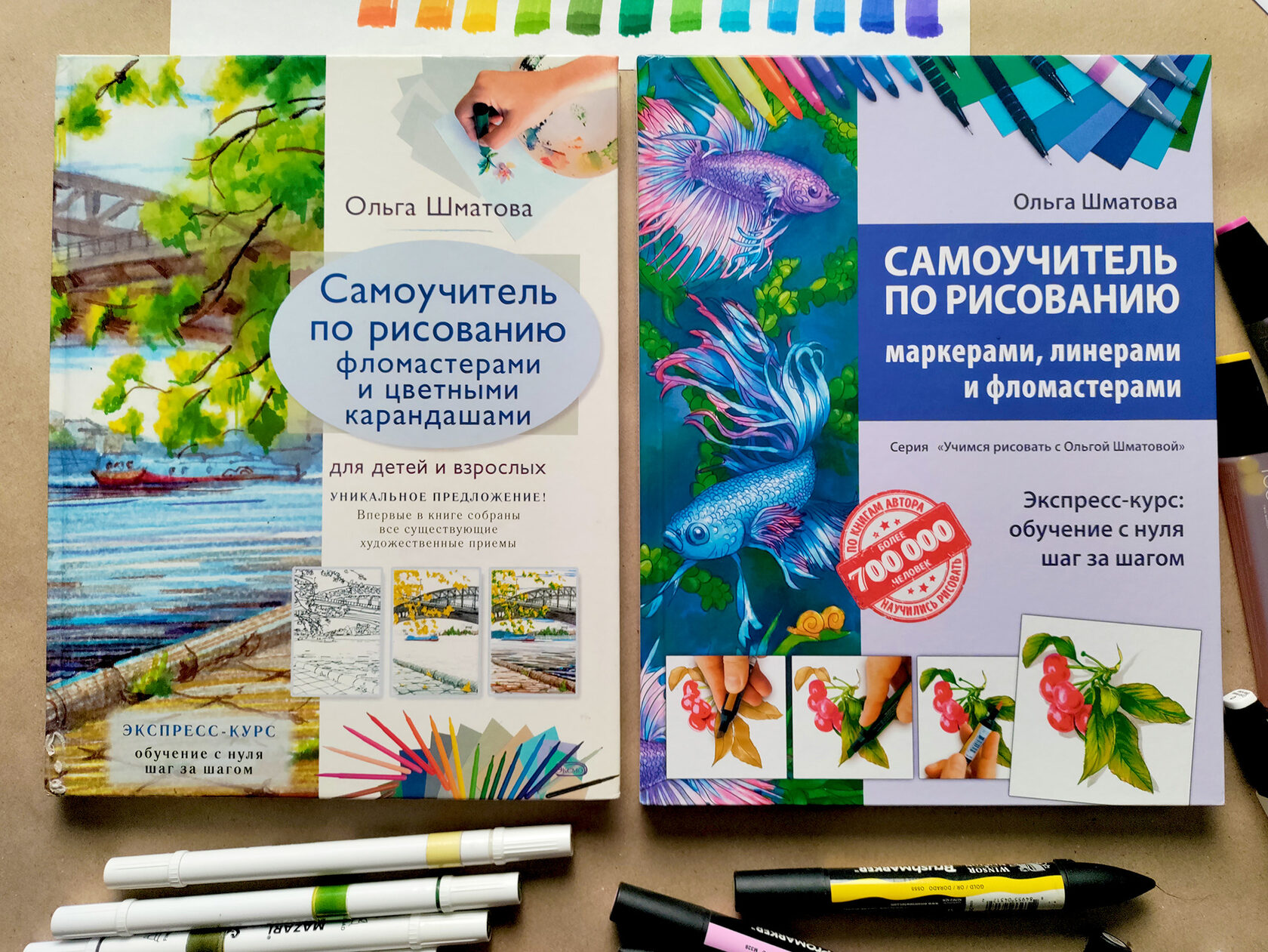
After the success of Felt-Tip Pens and Colored Pencils: A Self-Study Guide (2007) and the self-study guide to colored pencils (2016), readers asked for a separate, in-depth book on working with felt-tipped tools. In 2021 EKSMO published Markers, Fineliners, and Felt-Tip Pens: A Self-Study Guide, which reveals the creative potential of these underrated materials.
Felt-tipped tools (markers, fineliners, and felt-tip pens) have traditionally been seen as helpers for quick sketches or as children's art supplies. Yet they hold enormous artistic potential, thanks to:
- Bright, rich inks
- The ability to build up many layers
- A wide range of effects when colors mix
- Precise lines in different widths
- The ability to create both line drawings and painterly works
The book offers an expanded set of art techniques, including innovative methods:
- Creating gradients and smooth transitions
- Layering techniques
- Working with different types of nibs
- Mixing colors
- Creating textures and surface effects
- Combining markers with other media
- Working on a wet surface
- Using different types of paper
Edition history
- 2007: First publication of Felt-Tip Pens and Colored Pencils: A Self-Study Guide, the first book in Russia to present felt-tip pens as a serious art medium.
- 2016: An expanded self-study guide to colored pencils, with an in-depth study of pencil techniques, is published in the series "Learn to Paint with Olga Shmatova." It is still being reprinted.
- 2021: Markers, Fineliners, and Felt-Tip Pens: A Self-Study Guide is published in the same series, devoted entirely to modern techniques with felt-tipped tools. It is still being reprinted.
The success of the 2007 book led to two separate, expanded books, each exploring its own medium in depth. This made it possible to show more fully what both colored pencils and felt-tip pens can do, and to include the author's new techniques for each.
Why markers, fineliners, and felt-tip pens
Technical possibilities:
- Bright, rich color in an instant
- Crisp, precise lines in different widths
- Color built up in layers
- Both line and painterly effects
- Large areas filled quickly
Practical:
- Always ready to use
- No extra tools needed
- Quick drying
- Compact
- Easy to carry
A wide range of effects:
- Different types of nibs
- Many shades and tones
- Color mixing
- Textures and surface effects
- Work in different techniques
Modern options:
- Professional-quality alcohol markers
- Refillable systems
- Replaceable nibs
- Special sets for different tasks
- Compatibility with digital formats
Versatile uses:
- Sketching and quick studies
- Illustration
- Design
- Lettering
- Comics and manga
- Architectural sketches
- Fashion illustration
Creative freedom:
- Spontaneity and expressiveness
- Capturing ideas quickly
- Working anywhere
- Experimenting with techniques
- Developing a style of your own
Who this book is for
- Beginning artists who want to learn modern drawing media
- Anyone who wants to create bright illustrations and sketches
- Designers and illustrators who want to expand their technical skills
- Artists looking for new means of expression
- Fans of urban sketching and sketching in general
- Anyone who wants to learn techniques for making artwork quickly
What's inside
Contents
- About the author and the book, p. 6
- Art materials, p. 10
Art techniques
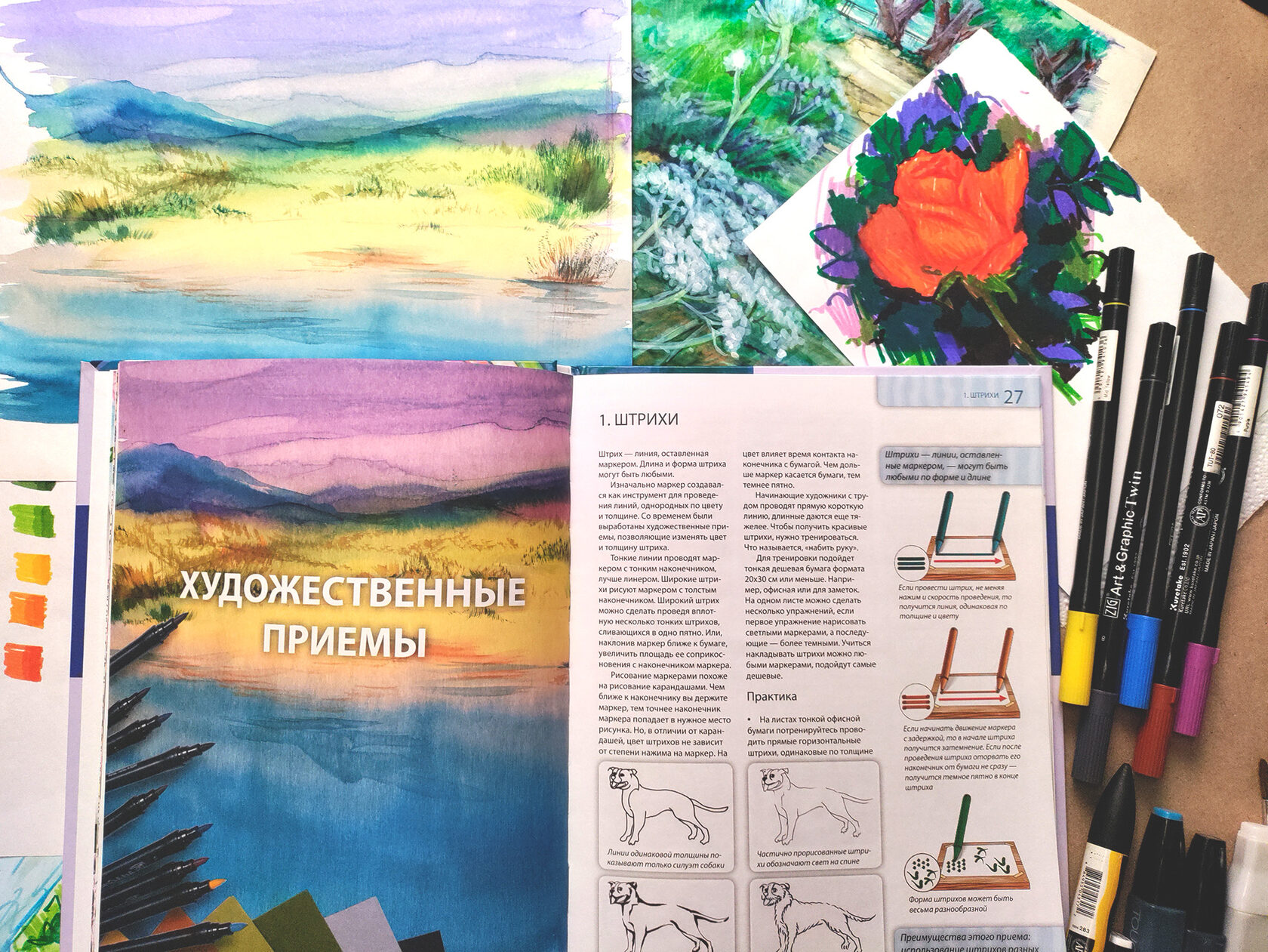
- Strokes, p. 27
- Hatching, p. 30
- Toning, p. 34
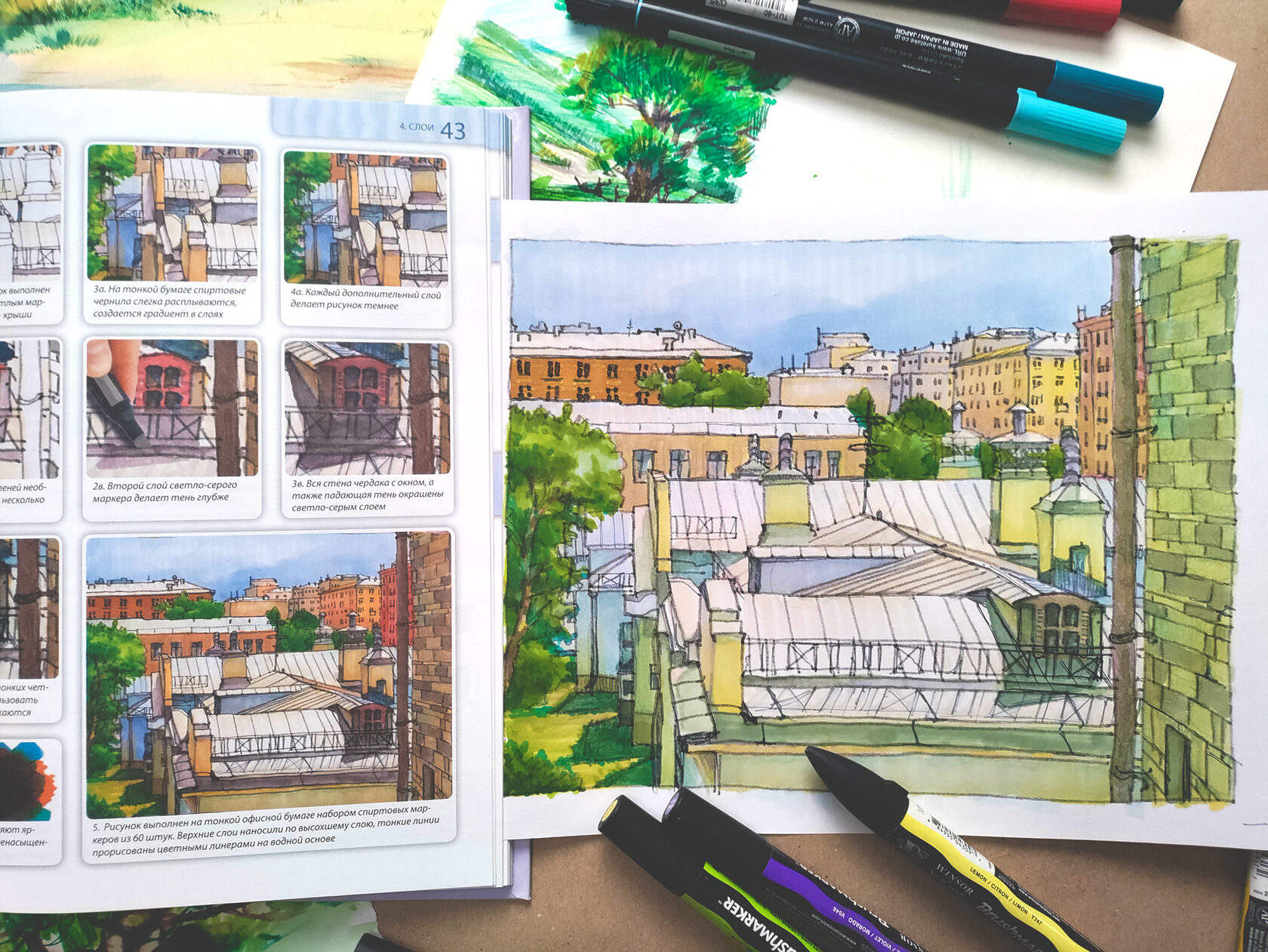
- Layering, p. 38
- Gradient, p. 41
- Dry and worn-out markers, p. 51
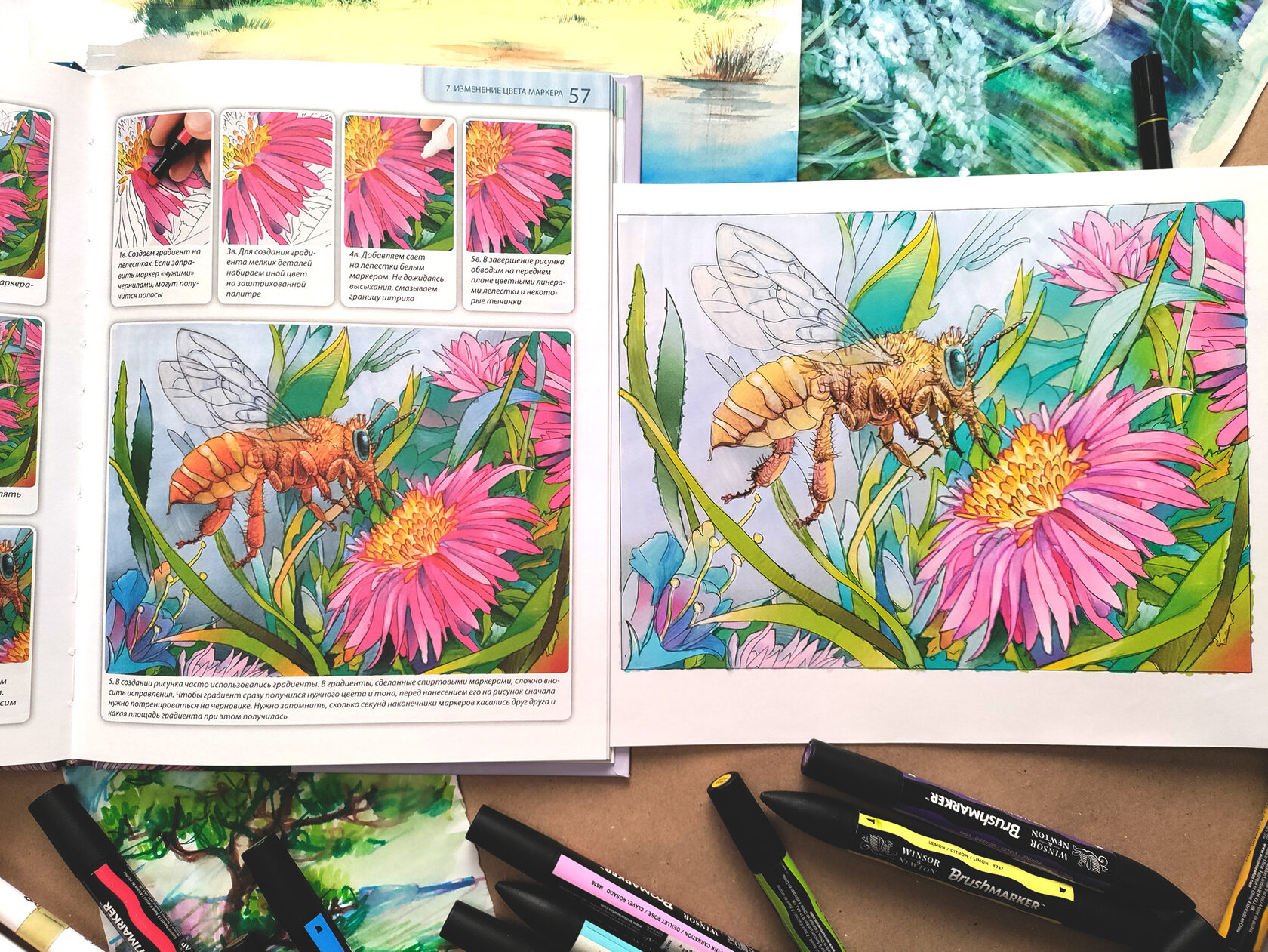
- Changing a marker's color, p. 54
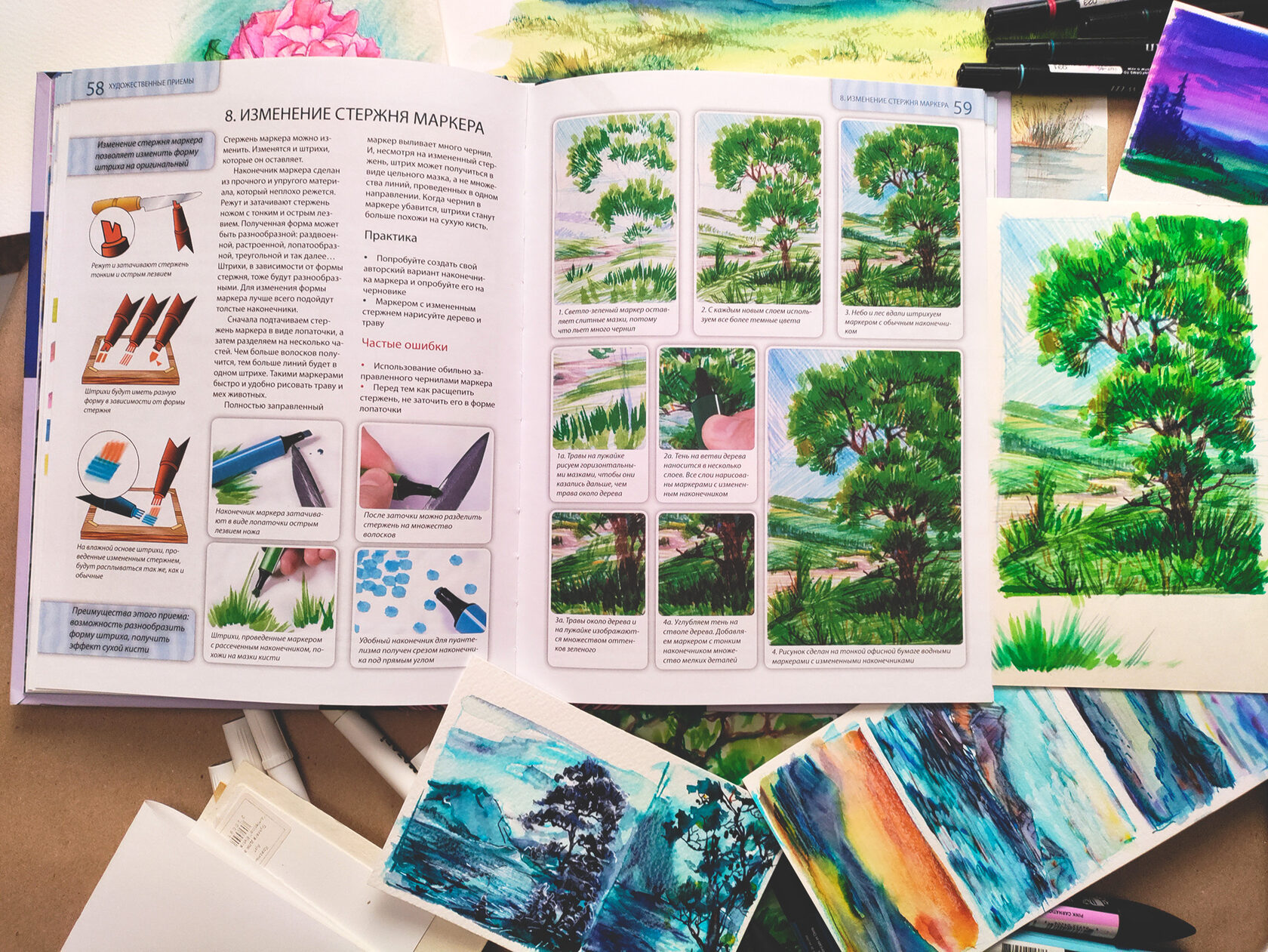
- Changing a marker's nib, p. 58
- White marker, p. 60
- Blender, p. 62
- Non-absorbent ground, p. 64
- Colored ground, p. 66
- Textured ground, p. 70
- Spattering, p. 72
- Stamps, p. 74
- Monotype, p. 76
- Washing out, p. 78
- Markers as paint, p. 81
- Brushstrokes. Dry brush, p. 82
- Ink. Flat fills, p. 84
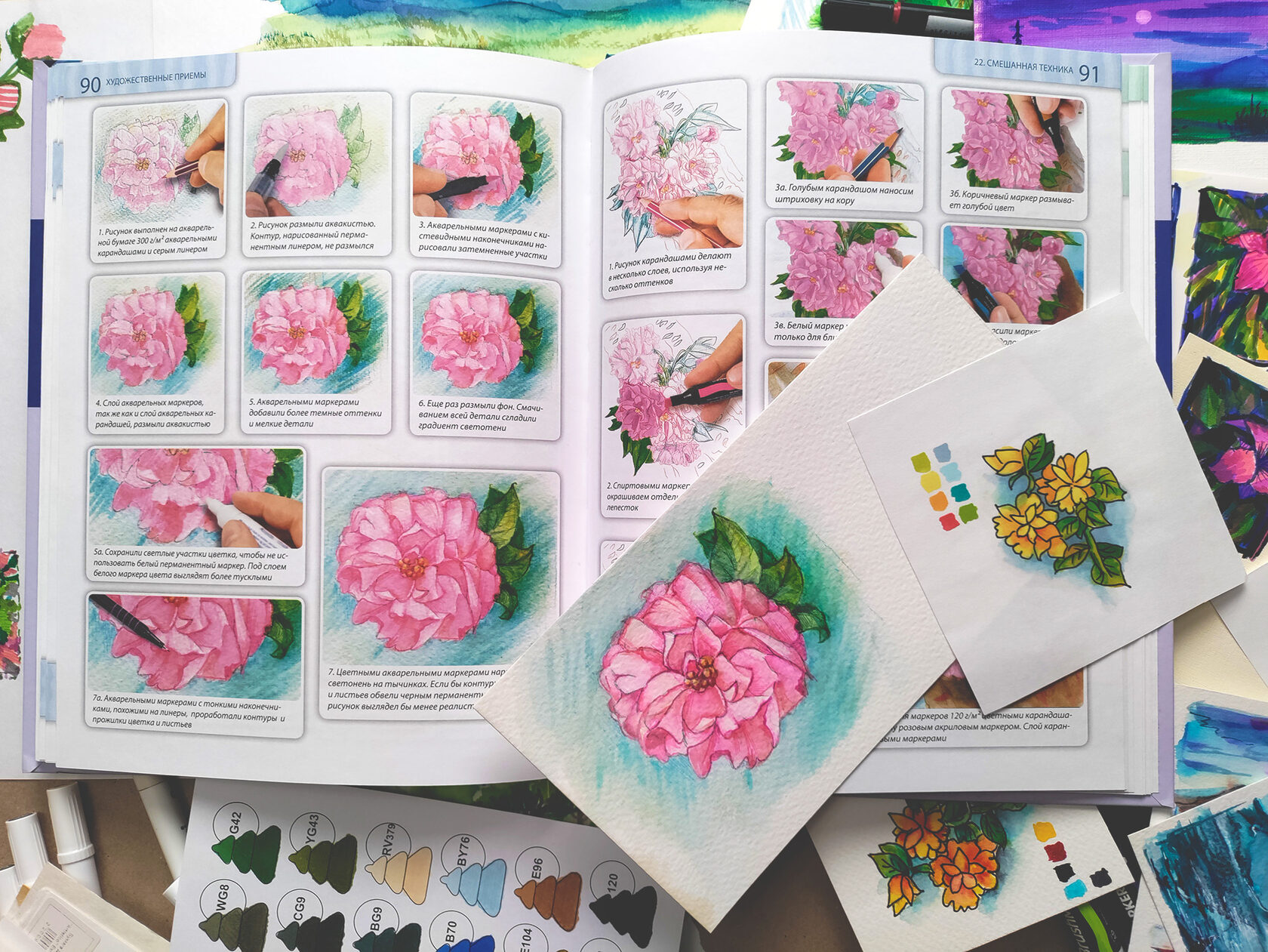
- Mixed media, p. 86
- Stencils and masks, p. 92
- Fixing mistakes, p. 94
Let's draw together
- Pattern, p. 98
- Fairy-tale characters, p. 100
- Flower, p. 102
- Orchid, p. 104
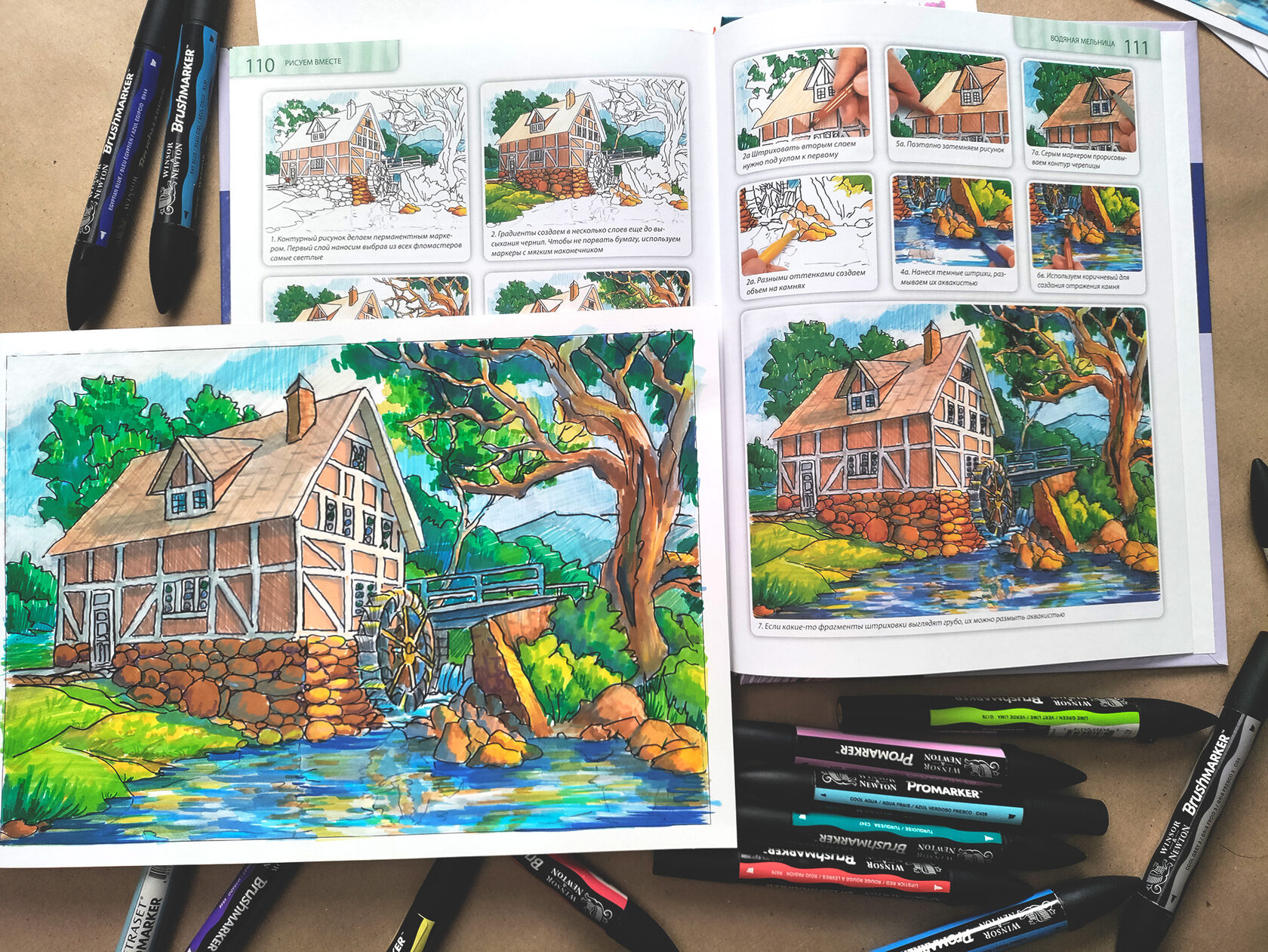
- Water mill in three versions, p. 106
In the book
- 23 techniques for felt-tipped tools
- 3 to 10 exercises in each technique chapter
- 5 complete step-by-step demonstrations of a finished drawing
Features
- Clear explanations with examples of student work
- Detailed step-by-step illustrations
- Technique diagrams with practical tips
- Common mistakes and how to fix them
- A set of exercises for every technique
- Advice from an experienced artist
What you will learn
- Skills and techniques for working with markers, fineliners, and felt-tip pens
- How to create smooth transitions of color and tone
- How to draw fine lines
- How to apply semi-transparent layers
- Original techniques for markers, fineliners, and felt-tip pens
- How to choose materials and tools
Student work
The book features work by the author and her students, credited in the book. At first, Olga Shmatova did not always sign the illustrations, trusting readers to tell professional work from student work on their own.
But the drawings her students made under her guidance turned out so well that even experienced artists could not always say for sure who had made them. That is striking proof that Olga Shmatova's method helps beginners achieve impressive results.
To avoid confusion, later editions began marking student work with a special sign: a white smiley face. This way readers can appreciate the author's skill and give her students' progress its due.
Edition details
- Series: "Learn to Paint with Olga Shmatova" (in Russian)
- Publisher: EKSMO
- ISBN 978-5-699-96858-9
- 112 illustrated pages
- Format: 84×108 1/16
- First published: 2021, still being reprinted
The year printed in your copy may differ from the year of first publication, because the publisher updates it with every reprint. You can check which edition you have in the publication details on the last page of the book. The ISBN may also change with a reprint.
Inside the book
New practice sheets and drawing tips by email
Optional — no signup needed to download.
One email a week at most. Unsubscribe anytime. Privacy Policy